
Janmashtami 2026 Date, Puja Timings, Fasting Rules & Krishna Story
Janmashtami 2026 will be observed on Friday, 4 September 2026. Devotees across India and around the world will celebrate the birth of Lord Krishna, the eighth avatar of Lord Vishnu, through fasting, prayers, devotional singing, temple visits, and midnight worship. The Nishita Puja, which commemorates Krishna’s divine birth, is expected to take place around midnight between 4 and 5 September 2026.
For millions of devotees, Janmashtami is not merely a festival. It is an opportunity to reconnect with dharma, devotion, righteousness, and the timeless teachings of Lord Krishna as revealed in the Bhagavad Gita.
Janmashtami 2026 Quick Facts
| Item | Details |
|---|---|
| Festival | Krishna Janmashtami 2026 |
| Date | Friday, 4 September 2026 |
| Nishita Puja | Midnight between 4-5 September 2026 |
| Approximate Puja Time | 12:03 AM – 12:49 AM on 5 September 2026 |
| Main Deity | Lord Krishna |
| Also Known As | Gokulashtami, Krishna Jayanthi |
| Observed By | Hindus worldwide |
| Main Practices | Fasting, Puja, Bhajans, Temple Visits, Midnight Worship |
| Significance | Celebrates the birth of Lord Krishna |
1. Janmashtami 2026 Date and Timings
Janmashtami 2026 will be observed on Friday, 4 September 2026. Devotees across India and around the world will celebrate the birth of Lord Krishna, the eighth avatar of Lord Vishnu, through fasting, prayers, devotional singing, temple visits, and midnight worship. The Nishita Puja, which commemorates Krishna’s divine birth, is expected to take place around midnight between 4 and 5 September 2026.
For millions of devotees, Janmashtami is not merely a festival. It is an opportunity to reconnect with dharma, devotion, righteousness, and the timeless teachings of Lord Krishna as revealed in the Bhagavad Gita.
| Event | Date |
|---|---|
| Krishna Janmashtami 2026 | Friday, 4 September 2026 |
| Nishita Puja | Midnight of 4-5 September 2026 |
| Approximate Nishita Puja Time | 12:03 AM – 12:49 AM (5 September 2026) |
Many devotees remain awake until midnight because tradition holds that Lord Krishna manifested at this sacred hour in Mathura.
Different regions may observe the festival according to Smarta or Vaishnava traditions, causing slight variations in observance dates and timings.
2. Why Janmashtami is Celebrated
Janmashtami celebrates the appearance of Lord Krishna on Earth.
According to Hindu scriptures, Krishna was born during a period when adharma, injustice, and tyranny had become widespread. King Kansa ruled with fear and cruelty, and the people of Mathura suffered greatly under his reign.
Lord Vishnu incarnated as Krishna to:
- Protect the righteous
- Destroy evil forces
- Restore dharma
- Guide humanity toward spiritual wisdom
- Demonstrate divine love and compassion
Krishna’s life continues to inspire devotees because it combines devotion, wisdom, courage, leadership, and divine love.
3. The Birth Story of Lord Krishna
The Krishna birth story is among the most beloved narratives in Sanatan Dharma.
A prophecy warned King Kansa that the eighth child born to his sister Devaki would cause his downfall. Terrified by this prediction, Kansa imprisoned Devaki and her husband Vasudeva.
One by one, Kansa killed their first six children.
The seventh child, Balarama, was divinely transferred to another womb.
When the eighth child was born, extraordinary events unfolded.
At midnight:
- The prison doors opened automatically.
- The guards fell into deep sleep.
- The chains binding Vasudeva were released.
- Heavy rains covered Mathura.
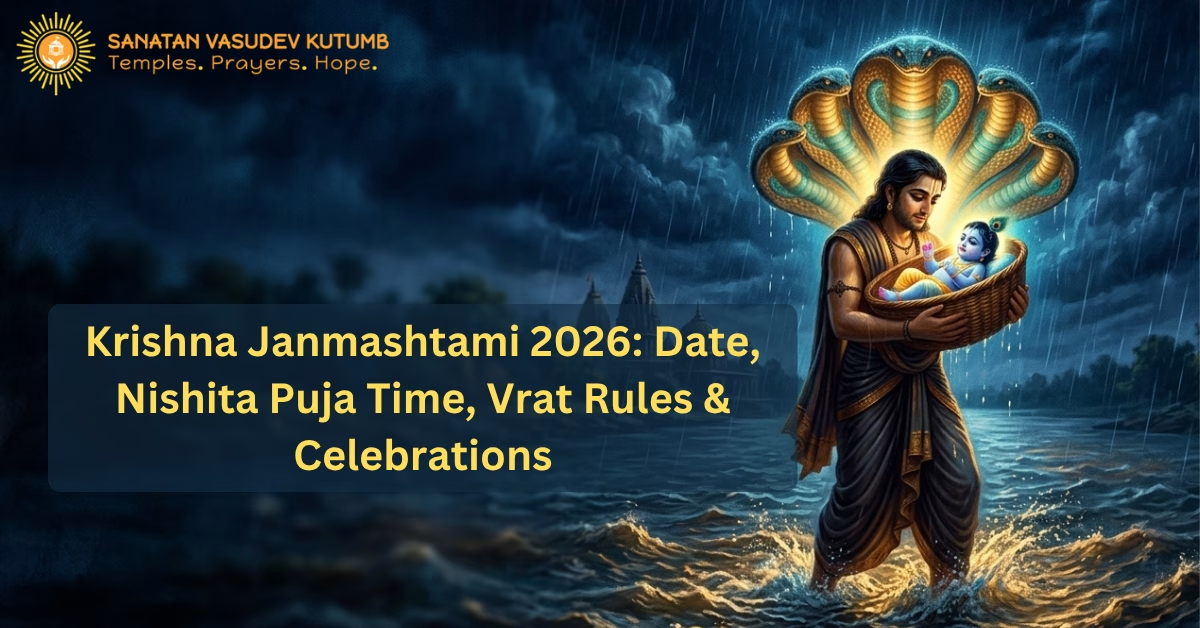
Vasudeva carried the newborn Krishna across the Yamuna River to Gokul.
The serpent Sheshnag spread his hood over the infant Krishna, protecting him from the storm.
Krishna was exchanged with the newborn daughter of Nanda and Yashoda.
When Kansa attempted to kill the child, she transformed into the divine goddess Yogamaya and announced that his destroyer had already been born elsewhere.
This miraculous birth marks the beginning of Krishna’s divine mission on Earth.
4. Spiritual Significance of Janmashtami
Janmashtami symbolizes the victory of divine consciousness over ignorance.
The festival reminds devotees that:
- Good ultimately triumphs over evil.
- Dharma prevails despite adversity.
- Divine grace protects sincere devotees.
- Spiritual wisdom leads to liberation.
- God incarnates whenever righteousness declines.
The Bhagavad Gita contains one of Krishna’s most famous declarations:
“Whenever righteousness declines and unrighteousness rises, I manifest Myself.“
For devotees, Janmashtami is an occasion to renew faith, deepen devotion, and strengthen spiritual discipline.
5. Janmashtami Puja Muhurat
The most sacred period of Janmashtami is the Nishita Kaal, representing Krishna’s divine birth moment.
Key Worship Periods
| Ritual | Significance |
|---|---|
| Morning Sankalp | Beginning of the fast |
| Evening Bhajans | Devotional singing |
| Midnight Nishita Puja | Krishna birth celebration |
| Aarti | Offering light to the Lord |
| Fast Breaking | After prescribed observance |
Many devotees perform:
- Krishna Abhishekam
- Bhagavad Gita reading
- Vishnu Sahasranama chanting
- Bhajan and kirtan sessions
- Temple darshan
6. Step-by-Step Janmashtami Puja Vidhi
Step 1: Clean the Home
Clean the worship area and create a sacred environment.
Step 2: Prepare the Altar
Place:
- Lord Krishna idol or picture
- Peacock feathers
- Tulsi leaves
- Butter (Makhan)
- Fruits
- Flowers
- Incense
Step 3: Sankalp
Take a vow to observe the Janmashtami fast with devotion.
Step 4: Offer Panchamrit
Prepare Panchamrit using:
- Milk
- Yogurt
- Honey
- Sugar
- Ghee
Step 5: Perform Abhishek
Bathe the Bal Gopal idol with Panchamrit and clean water.
Step 6: Offer Bhog
Offer:
- Makhan Mishri
- Fruits
- Dry fruits
- Panjiri
- Kheer
Step 7: Janmashtami Fasting Rules
Pregnant women, elderly devotees, children, and individuals with medical conditions should consult a qualified healthcare professional and follow a modified fast if necessary. Devotion and sincerity are more important than physical austerity.
Step 7: Janmashtami Puja Vidhi
- Makhan Mishri (Lord Krishna’s favorite offering)
- Panchamrit
- Tulsi leaves
- Butter-based sweets
- Seasonal fruits
Step 8: Foods Allowed During the Fast
- Foods Usually Avoided During Janmashtami Fast
- Rice
- Wheat flour
- Regular table salt (many devotees use rock salt instead)
- Onion
- Garlic
- Non-vegetarian food
- Alcohol
Step 9: Chant Krishna Mantras
Popular chants include:
- Hare Krishna Maha Mantra
- Om Namo Bhagavate Vasudevaya
- Krishna Ashtakam
Step 10: Midnight Aarti
Perform Aarti during Nishita Kaal.
Step 11: Distribute Prasad
Share blessed food with family and devotees.
7. Janmashtami Fasting Rules
Janmashtami fasting rules vary according to family traditions and spiritual discipline.
Common practices include:
Nirjala Fast
No food or water until midnight.
Phalahar Fast
Only fruits, milk, and fasting-approved foods.
Satvik Fast
Simple vegetarian foods without grains.
Children and Elderly
Health conditions should always take priority. Devotion matters more than physical austerity.
The purpose of fasting is:
- Self-discipline
- Purification
- Increased focus on God
- Reduction of worldly distractions
8. Foods Allowed During the Fast
Common fasting foods include:
Fruits
- Apples
- Bananas
- Pomegranates
- Grapes
- Papaya
Dairy Products
- Milk
- Yogurt
- Paneer
- Buttermilk
Fasting Grains
- Sabudana
- Rajgira
- Singhara flour
- Kuttu flour
Traditional Janmashtami Dishes
- Sabudana Khichdi
- Makhana Kheer
- Fruit Chaat
- Rajgira Laddoo
- Panjiri
- Makhan Mishri
Krishna Temples


Celebrate Janmashtami with devotion.
Connect with Temples • Submit Prayers • Support Restoration
