
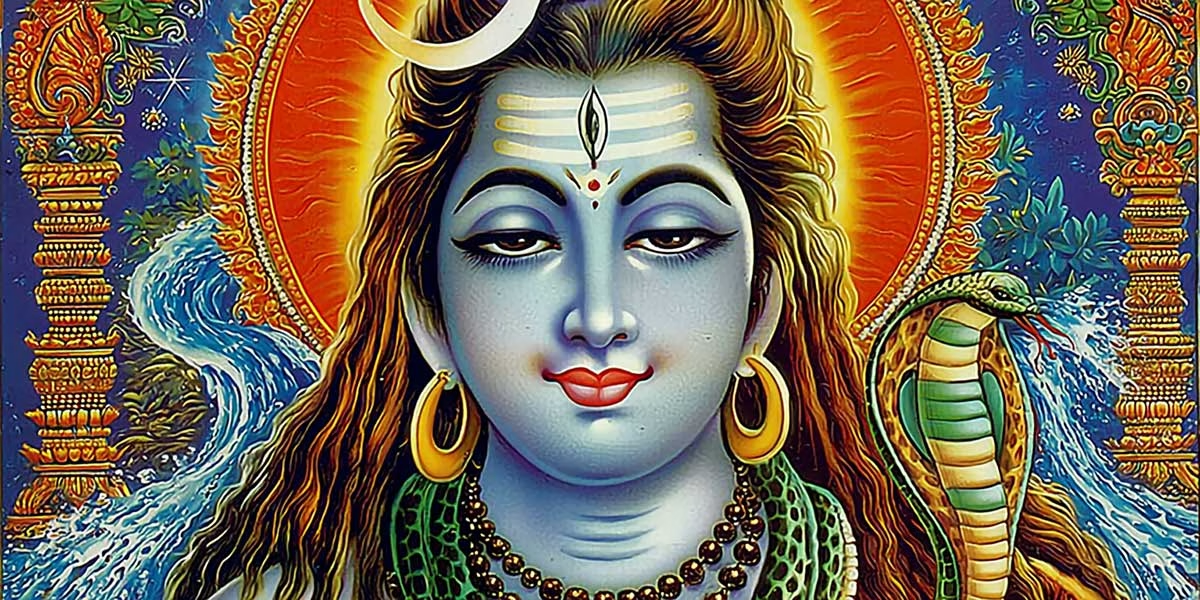
Lord Shiva – The Supreme Yogi and Cosmic Transformer
Adorned with the crescent moon, sacred Ganga flowing from his matted locks, and serpents coiled around his neck, Shiva reminds devotees of the unity of opposites within the cosmic order. His dance as Nataraja symbolizes the rhythm of existence – creation, preservation, and dissolution in seamless harmony. Devotees worship him not merely as a destroyer, but as the ultimate purifier of ignorance and ego.
Temples Dedicated to Lord Shiva in India
From snow-clad peaks to riverbanks and ancient cities, Lord Shiva’s temples stand as timeless symbols of devotion and mystic energy. Among them, the twelve Jyotirlingas hold special significance, believed to be self-manifested pillars of light that radiate his divine presence. Pilgrims across Bharat undertake arduous journeys to seek his grace, chanting “Om Namah Shivaya,” the mantra that echoes through eternity.
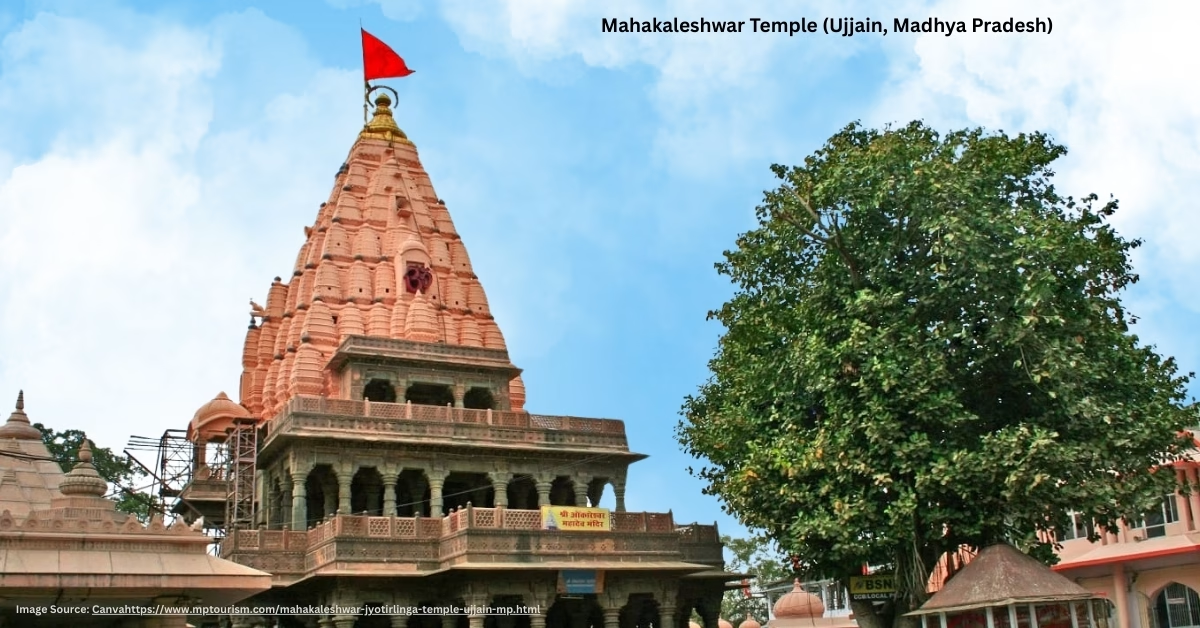
Mahakaleshwar Temple Ujjain is one of the twelve revered Jyotirlingas of Lord Shiva, uniquely housing a swayambhu (self-manifested) lingam that faces south – a rare distinction among all Jyotirlingas.
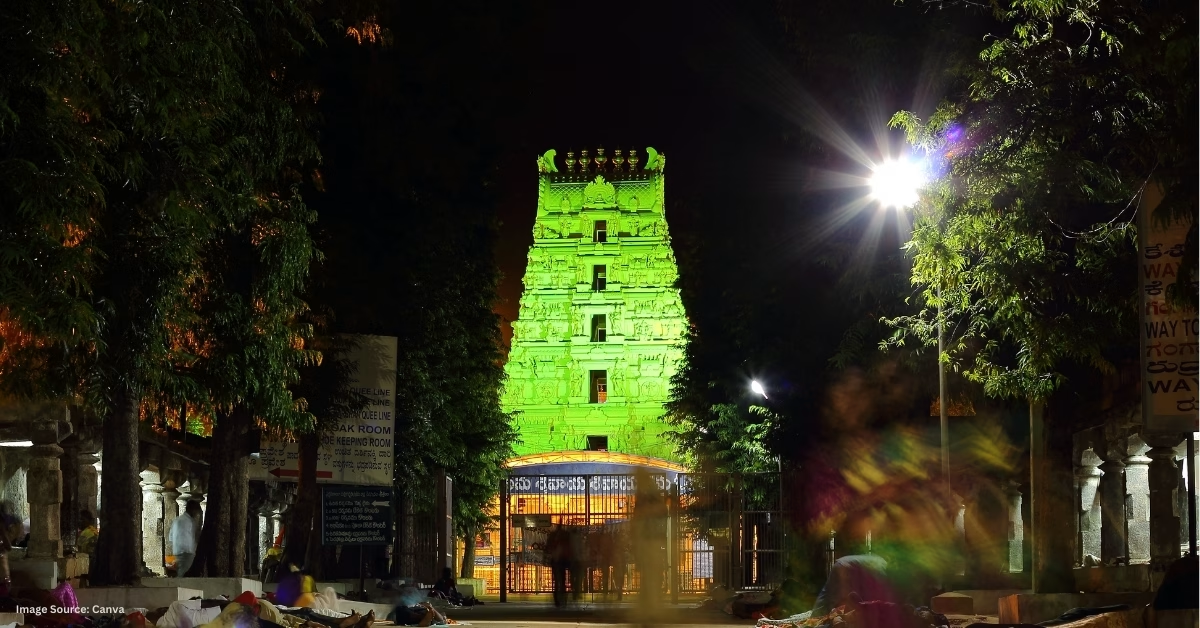
Mallikarjuna Temple (Srisailam, Andhra Pradesh) is a rare and revered shrine where Lord Shiva (as Mallikarjuna) and Goddess Parvati (as Bhramaramba) are worshipped together.
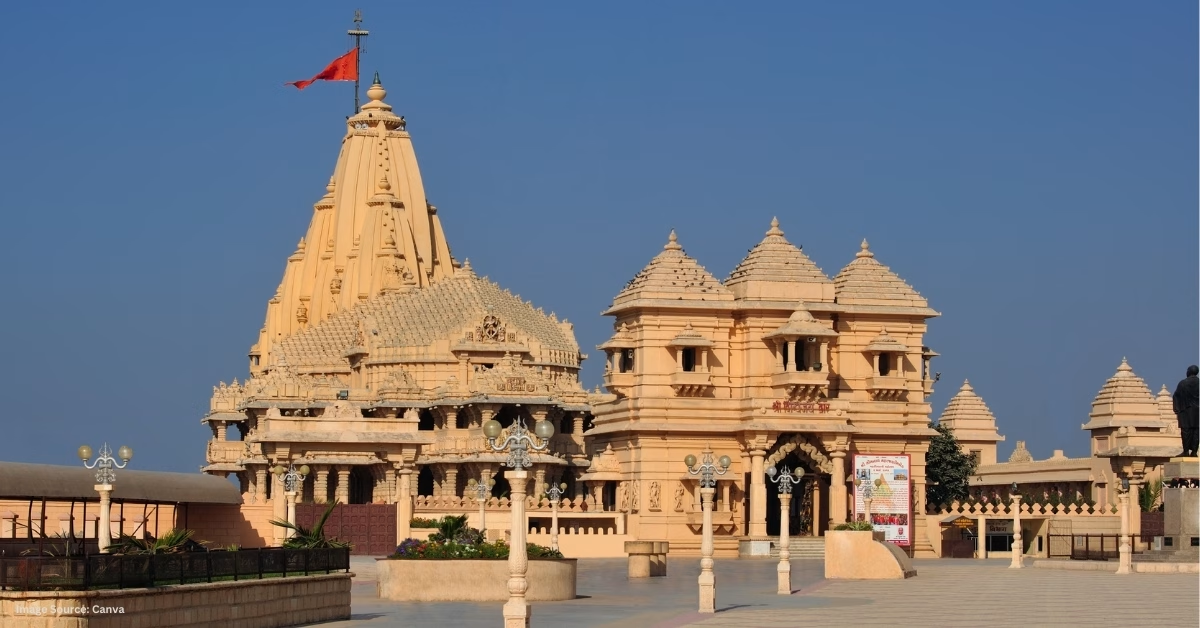
The Somnath Temple – Gujarat is one of the twelve revered Jyotirlingas and the first among them. Located in Prabhas Patan near Veraval on the Saurashtra coast.
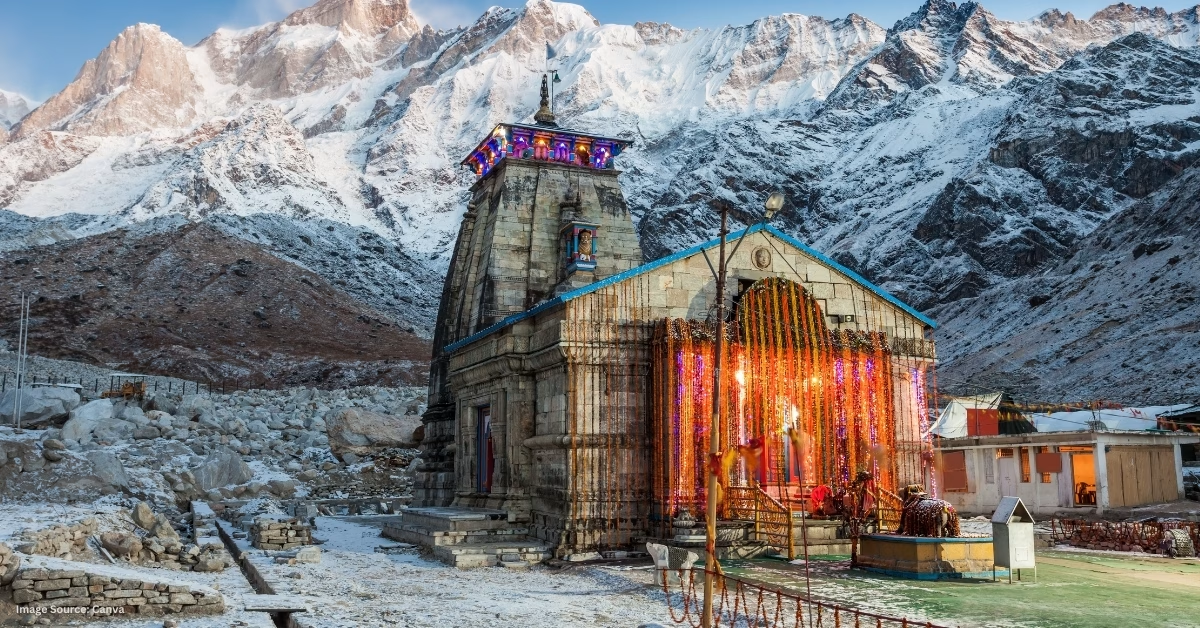
Perched at an elevation of approximately 3,583 meters on the banks of the Mandakini River in the Garhwal Himalayas.
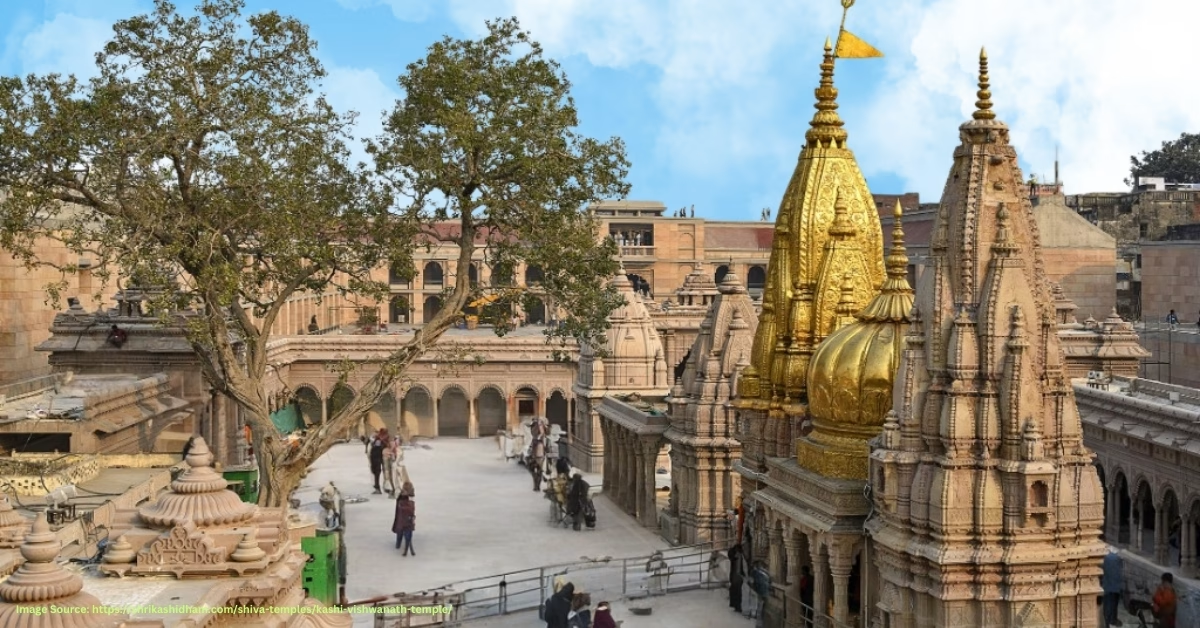
The Kashi Vishwanath Temple – Varanasi stands as one of India’s most sacred pilgrimage sites, dedicated to Lord Shiva and revered as one of the 12 Jyotirlingas.
Interesting Facts About Lord Shiva
- Shiva Panchamukha (the five-faced form) represents his dominion over the five cosmic functions – creation, preservation, destruction, concealment, and grace.
- As Adiyogi, he is considered the first teacher of yoga, transmitting the science of inner transformation to the Saptarishis.
- His blue throat, earning him the name Neelkantha, came from consuming the deadly poison Halahala to save the universe during the churning of the cosmic ocean.
- The Trishula (trident) held by Shiva represents the three aspects of time – past, present, and future – under his mastery.
- Mount Kailash is believed to be his eternal abode – a symbol of transcendence where divine energy remains still and eternal.
Did You Know?
Lord Shiva is revered in his Panchamukha (five-faced) form – Sadyojata, Vamadeva, Aghora, Tatpurusha, and Ishana – each governing a direction and element. Together they signify total mastery over creation and consciousness, uniting all aspects of existence within one divine being.
A Closing Reflection
To meditate upon Lord Shiva is to touch the stillness that precedes creation itself. His temples whisper of transcendence – where the mortal dissolves into the eternal. The sacred chant “Om Namah Shivaya” becomes not just a prayer, but a remembrance that within every heart burns the same flame of divine awareness that Shiva embodies.
A Spiritual Haven for Devotees Worldwide
Connect with Temples • Submit Prayers • Support Restoration