Important Links
Important Note: The donation button links to the official donation page of the Temple Trust. Sanatan Vasudev Kutumb has no affiliation with the temple or the donation process.
We pray that your wishes find the Almighty’s grace, and that you and your loved ones are always blessed, guided, and protected.
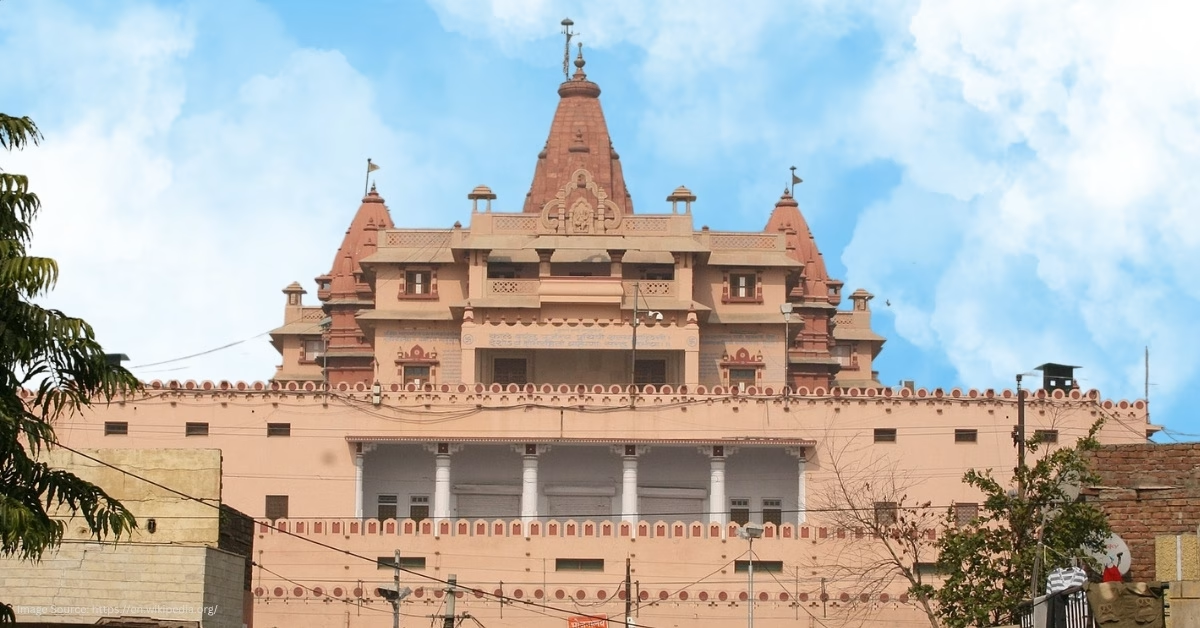
Sri Krishna Janmabhoomi Temple (Mathura, Uttar Pradesh)
Information on this page
Important Note: The donation button links to the official donation page of the Temple Trust. Sanatan Vasudev Kutumb has no affiliation with the temple or the donation process.
We pray that your wishes find the Almighty’s grace, and that you and your loved ones are always blessed, guided, and protected.
Overview
The Sri Krishna Janmabhoomi Temple Mathura Uttar Pradesh marks the exact birthplace of Lord Krishna, the eighth incarnation of Lord Vishnu. Located in the heart of Mathura, this sacred temple stands as a beacon of devotion, resilience, and faith. It is one of the most revered pilgrimage sites in India, forming part of the Krishna Janmabhoomi complex, which also houses ancient shrines, meditation halls, and museums. Pilgrims believe that visiting this temple washes away sins and brings them closer to moksha (liberation).
History of Sri Krishna Janmabhoomi Temple (Mathura, Uttar Pradesh)
The Krishna Janmabhoomi Temple history is a reflection of India’s cultural endurance and faith through centuries. The temple is said to have been originally built around 6th century BCE by King Vajranabh, Krishna’s great-grandson. Over time, it faced destruction and reconstruction multiple times — under various dynasties including the Kushans, the Guptas, and the Mughals.
The current structure was reconstructed in the 20th century under the vision of freedom fighter and philanthropist Madandas Devi Prasad, with contributions from devotees across India. The most sacred part of the complex is the Garbha Griha (sanctum), marking the prison cell where Krishna was born to Devaki and Vasudeva under Kansa’s captivity.
Architecture & Design
The Sri Krishna Janmabhoomi Temple blends modern architecture with ancient symbolism. The temple’s main sanctum is built over the ancient cell, preserved with stone and silver adornments. The spire (shikhara) rises majestically over the complex, symbolizing hope and freedom from darkness.
The complex includes multiple shrines dedicated to Radha-Krishna, Garbh Griha, Bhagavad Gita Mandir, and Keshav Dev Temple, each adding layers to the spiritual experience. Intricate carvings and murals narrate episodes from the Bhagavata Purana and Krishna’s early life in Mathura.
Religious Significance
The Mathura Krishna Temple is not only a spiritual centre but also the emotional heart of Krishna devotion (bhakti). It represents the triumph of divine love over tyranny, as Lord Krishna was born in prison to destroy the evil king Kansa. Devotees believe that standing in the Garbha Griha allows them to connect directly with Krishna’s divine energy.
Every corner of the temple resonates with the chants of “Jai Shri Krishna!” as priests perform rituals that reenact Krishna’s birth story, particularly during Janmashtami, when the entire city of Mathura turns into a divine celebration of light and devotion.
Festivals & Rituals – Sri Krishna Janmabhoomi Temple (Mathura, Uttar Pradesh)
The Sri Krishna Janmabhoomi Temple Mathura Uttar Pradesh celebrates numerous Vaishnavite festivals with grandeur:
- Janmashtami (August) – The biggest festival marking Krishna’s birth, celebrated at midnight with devotional music and special rituals in the prison cell.
- Holi (March) – Known as Phoolon Wali Holi (Flower Holi), where petals replace colors in celebration of divine love.
- Diwali & Annakut (October–November) – The temple is decorated with lamps and mountains of sweets are offered to the deity.
- Radhashtami (September) – Dedicated to Goddess Radha, symbolizing divine feminine energy.
- Gita Jayanti (December) – Celebration of the day Lord Krishna delivered the Bhagavad Gita on the battlefield of Kurukshetra.
Annual Events & Festival Calendar
| Month | Festival / Event | Description |
|---|---|---|
| March | Holi | Celebrated as Phoolon Wali Holi, using fragrant flowers instead of colors. |
| August | Janmashtami | Midnight birth rituals in the Garbha Griha marking Krishna’s divine arrival. |
| September | Radhashtami | Devotional singing and rituals dedicated to Goddess Radha. |
| October – November | Diwali & Annakut | Temple illuminated; offerings of sweets and grains to the deity. |
| December | Gita Jayanti | Recitations of Bhagavad Gita and cultural performances. |
Cultural Practices
Devotees begin their Mathura darshan by offering butter, tulsi leaves, and Makhan Mishri, symbolizing Krishna’s childhood joy. The temple emphasizes seva bhava (service with devotion), and devotees often participate in distributing food (annadanam) and singing bhajans. The midnight aarti during Janmashtami is one of India’s most spiritually charged moments, where bells, conches, and chants merge in divine rhythm.
Modern Updates & Facilities
- Digitized queue management during peak festivals
- CCTV-monitored security around the complex
- Audio guides in Hindi and English
- Online donation and virtual darshan platforms
- Museum and cultural center narrating Krishna’s life story
Visitor Information
- Krishna Janmabhoomi Temple timings:
- Summer: 5:00 AM – 12:00 PM | 4:00 PM – 9:30 PM
- Winter: 5:30 AM – 12:00 PM | 3:00 PM – 8:30 PM
- Aarti timings: Morning and evening; special midnight aarti on Janmashtami
- Dress code: Modest traditional attire recommended
- Photography: Restricted inside the Garbha Griha
How to Reach Sri Krishna Janmabhoomi Temple (Mathura, Uttar Pradesh)
- By Air: Agra Airport (60 km) | Delhi Airport (150 km)
- By Train: Mathura Junction (2 km from temple)
- By Road: Connected by NH-19 from Delhi, Agra, and Vrindavan
Nearby Attractions
- Dwarkadhish Temple Mathura – Another major Krishna shrine within the city
- Vishram Ghat – Sacred riverbank where Krishna rested after killing Kansa
- Govardhan Hill – Symbol of Krishna’s protection and divine power
- ISKCON Temple Mathura – A peaceful devotional center for Krishna bhakt
Interesting Facts
- The prison cell (Garbha Griha) is located below the main sanctum – believed to be the exact spot of Krishna’s birth.
- The temple complex also includes Keshav Dev Temple, said to have been originally built by Krishna’s great-grandson.
- Archaeological excavations have unearthed artefacts dating back to 2nd century BCE, affirming Mathura’s antiquity as a Krishna site.
Conclusion
The Sri Krishna Janmabhoomi Temple Mathura Uttar Pradesh stands as the living soul of India’s spiritual legacy — the cradle where divinity was born to free humanity from darkness. Visiting this sacred birthplace of Lord Krishna is a profound experience that connects every devotee with faith, forgiveness, and eternal love.