Kamakhya Temple (Guwahati, Assam)
Information on this page
Important Note: The donation button links to the official donation page of the Temple Trust. Sanatan Vasudev Kutumb has no affiliation with the temple or the donation process.
May your prayer be granted, and may you be guided with peace, health, and prosperity.
Overview
Kamakhya Temple, Assam, perched atop the Nilachal Hills in Guwahati, is one of the most revered Shakti Peethas in India. Dedicated to Maa Kamakhya, this temple is a powerful symbol of feminine energy and tantric worship. The sanctum sanctorum houses the yoni-like stone believed to represent the goddess’s womb – making this shrine unique among Devi temples.
Kamakhya Mandir is visited by millions of devotees, tantrics, and spiritual seekers, especially during the Ambubachi Mela, a festival celebrating the goddess’s annual menstruation cycle – a rare and profound representation of divine femininity.
Historical Background
- Legend & Origins: The history of Kamakhya Temple traces back to the myth of Sati, whose body parts were scattered across the subcontinent. The yoni (reproductive organ) is believed to have fallen here, establishing Kamakhya as one of the most powerful Shakti Peethas.According to Kalika Purana, it is here that Shiva united with Shakti, and where Kama (desire) was revived – giving the temple its association with both spiritual power and fertility
- Ancient Reconstruction & Patronage: While the original structure dates back to pre-8th century, it was destroyed during early invasions and later rebuilt in the 17th century by King Naranarayan of the Koch Dynasty, incorporating a unique blend of Nagara and local Assamese architectural styles.
Spiritual Significance – Kamakhya Temple (Guwahati, Assam)
Maa Kamakhya Temple is considered the epicenter of tantric Shaktism in India. Unlike conventional idols, the goddess is represented by a natural stone depression fed by an underground spring, symbolizing female generative power.
Devotees visit the shrine to:
- Seek blessings for fertility, marriage, and spiritual growth
- Perform tantric rituals for healing and energy alignment
- Offer prayers during Ambubachi and Navaratri with deep reverence
Architecture & Highlights
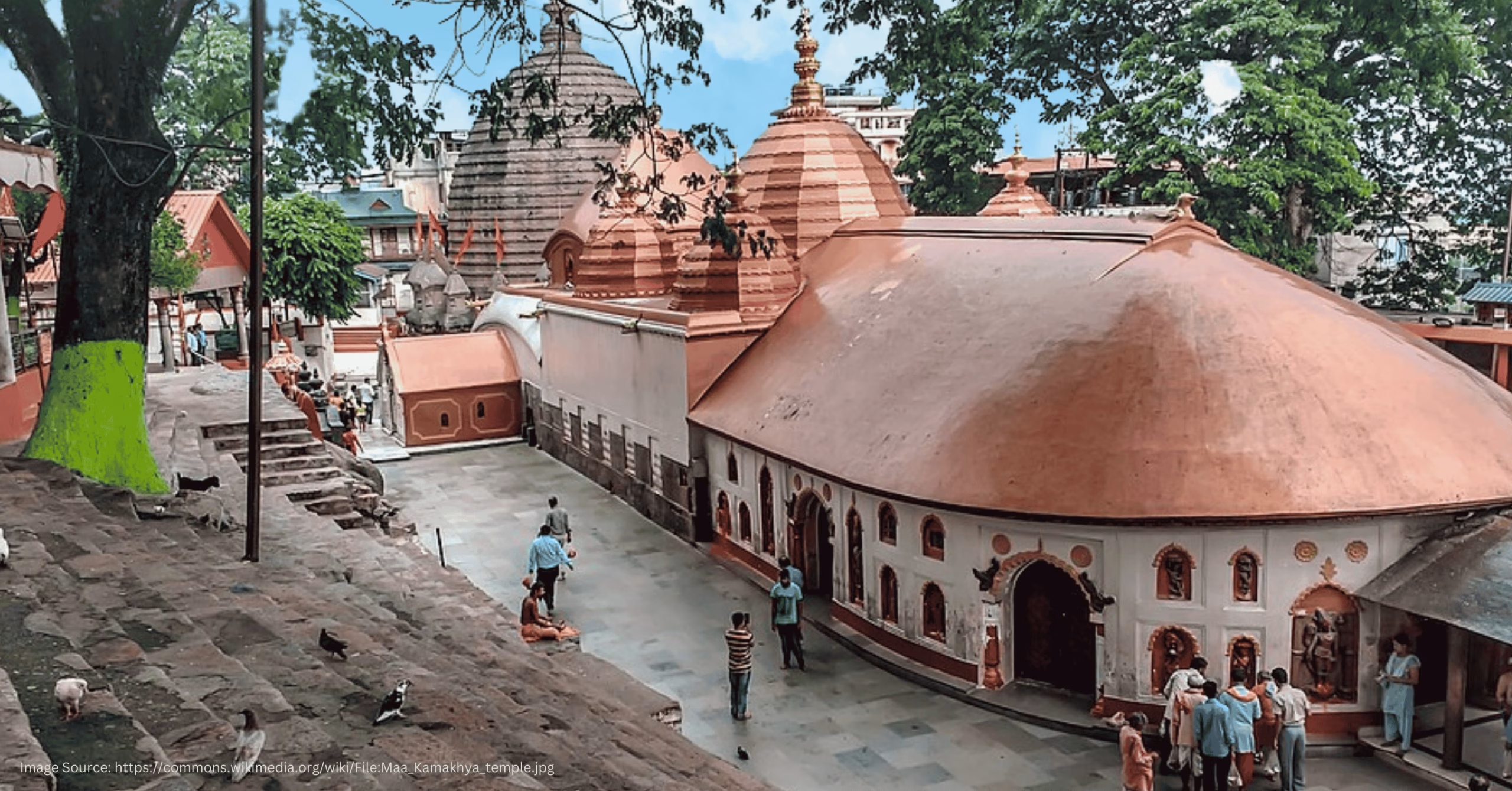
- The main dome is shaped like a beehive (shikhara) with small minaret-like structures around it
- The temple complex includes 10 other shrines dedicated to Mahavidyas, each representing an aspect of Shakti
- Stone-carved panels, Assamese floral motifs, and red-ochre walls dominate the aesthetic
- The Garbhagriha (sanctum) remains untouched, preserving its mystical sanctity
Cultural Practices
- Tantric Pujas are commonly performed by trained priests in secluded spaces
- Devotees offer red flowers, sindoor, and coconuts to the goddess
- The temple is closed during the Ambubachi period for 3 days to honor the goddess’s menstrual cycle – no darshan is allowed during this sacred time
- Kumari Puja and rituals honoring feminine energy are prominent during Navratri
Festivals & Rituals
Daily Practices
- Opening Time: 5:30 AM with Mangala Aarti
- Nitya Puja: Includes tantrik offerings and Devi Bhajans
- Afternoon Bhog: Offered to the goddess and later distributed as prasadam
Annual Events & Festival Calendar – Kamakhya Temple (Guwahati, Assam)
| Month | Festival/Event | Highlights |
|---|---|---|
| June | Ambubachi Mela | Celebrates the goddess’s menstruation. Massive gathering, temple closed for 3 days, reopened with grand rituals |
| March–April | Chaitra Navratri | Nine days of Durga worship, including Kumari Puja |
| Sept–Oct | Sharad Navratri | Bhajans, community feasts, and special tantras performed |
| August | Devi Janmotsav | Birthday of the goddess celebrated with rituals and lights |
| Year-round | Tantric Pujas | Performed during full moon and new moon nights by seekers and sadhus |
Modern Updates & Facilities
- Digital Darshan Services: Introduced during Ambubachi to allow remote
- Women-Only Zones: Created for comfort and spiritual space during high footfall
- Sanitation & Waste Management: Ambubachi attracts over 1 million visitors; improved sustainability measures are in place
- Eco-Friendly Lodging Initiatives: Basic lodges near Kamakhya Temple now follow green practices
- Security & Crowd Management: Drone monitoring and RFID-enabled entry during peak seasons
Visitor Information – Kamakhya Temple (Guwahati, Assam)
- Location: Nilachal Hills, Guwahati, Assam
- How to Reach:
- Air: Guwahati Airport (20 km)
- Rail: Kamakhya Railway Station (6 km)
- Road: Easily accessible from Guwahati city center
- Dress Code: Modest attire preferred, especially for entry into sanctum
- Lodging: Multiple lodges near Kamakhya Temple, both government and private, offer budget and deluxe stays
- Best Time to Visit Maa Kamakhya Mandir: October–March for weather; June for Ambubachi Mela (expect heavy crowd)
Interesting Facts
- Menstruating Goddess: Kamakhya is perhaps the only temple in the world where the goddess’s menstruation is honored and celebrated
- No Sculpted Idol: Devotees worship a naturally formed stone representing the goddess’s womb
- Major Tantric Hub: One of the most important centers for Tantric practices in India
- Secret Caves & Rituals: The hills around the temple are said to house secret caves used by sadhus for meditation and rites
- Royal Patronage: Rebuilt by Koch King Naranarayan, who also helped reestablish many tantric traditions at the site
Conclusion
The Kamakhya Temple, Assam is more than just a place of worship – it is a spiritual enigma, a feminine force field, and a Tantric pilgrimage like no other. Devotees who visit maa Kamakhya temple come away transformed – awakened by the raw, primal energy of Shakti that pulses through this sacred mountain shrine.